Resilience Therapy
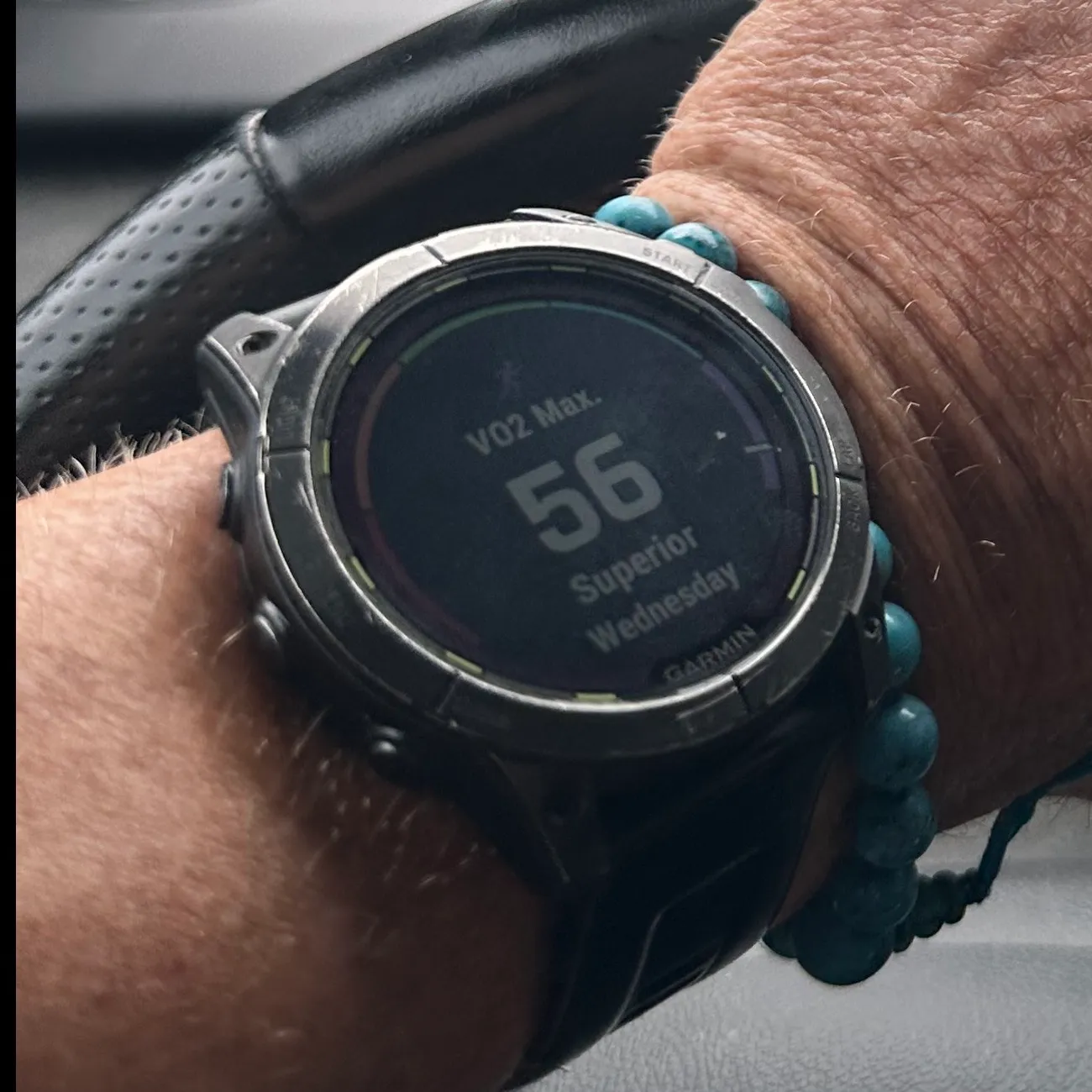
Resilience Therapy is a multi-faceted approach guided by the health data from your wearables and phone apps, so the work on your body and your mind actually shows up in the numbers. It explores the links between the sympathetic and parasympathetic nervous system, cardiovascular fitness, heart health, and psychological well-being.
Trevor recommends every client wear a Garmin watch; a simple app like HRV4Training will do to start, but the more information gathered, the better. See Choosing a wearable for a comparison of Garmin, Oura, Apple Watch, HRV4Training, and a body-composition scale.
We are also designing our own HRV app, resilienceHRV. It is in development and not released; see Moving forward at the end of this page. Until it ships, the recommendation above stands.
Beyond HRV, the program records and analyzes resting heart rate, resting breath rate, blood oxygen, blood pressure, and sleep quality, along with VO2 max, lactate threshold, and haemoglobin — the full autonomic, aerobic, and recovery picture, not just one metric. A 2025 longitudinal wearable study of over 180,000 people found lower resting heart rates, higher HRV, and better sleep characteristics consistently tracked with lower depression, anxiety, and stress (Inter- and Intrapersonal Associations Between Physiology and Mental Health, 2025). A 2025 meta-analysis linked depression to a roughly twenty percent higher risk of developing hypertension (Satapathy et al., 2025), and a 2021 meta-analysis of randomized trials showed improving sleep quality produced medium-sized improvements in depression, anxiety, and stress (Scott et al., 2021). Slower resting breath rate has also been tied to higher psychological well-being and lower distress (Scientific Reports, 2023).

That same HRV data drives the training itself. A 2020 meta-analysis in Applied Sciences — eight randomized trials — found HRV-guided training beat predefined plans on VO2max, max aerobic power, and ventilatory thresholds, with fewer non-responders (Manresa-Rocamora et al., 2020). A 2021 methodological meta-analysis in IJERPH found HRV-guided training superior for raising vagal-related HRV indices, with small but consistent edges on fitness and performance (Manresa-Rocamora et al., 2021). The key trials: Javaloyes et al. (2020) in Journal of Strength and Conditioning Research — HRV-guided cyclists improved VO2max, peak power, and time-trial power versus block periodization. Nuuttila et al. (2017) in International Journal of Sports Medicine — HRV-guided block training produced bigger gains in max treadmill velocity and 3000m performance, plus rising RMSSD and testosterone. Vesterinen et al. (2016) in MSSE — recreational runners did fewer hard sessions but improved 3000m more. And a 2021 study in Journal of Functional Morphology and Kinesiology showed HRV-guided high-intensity functional training matched predetermined results with far less high-intensity volume.

Endurance sports like trail running work as nature-based interventions — the connection with nature itself delivers benefits beyond the exercise. A 2026 second-order meta-analysis in Nature Human Behaviour covering over ten million participants found nature-based interventions cut anxiety and depressive symptoms with large effects, and boosted positive affect and relaxation (Nature Human Behaviour, 2026). A 2026 network meta-analysis in Frontiers in Public Health ranked green exercise as the most effective intervention for mental health — significantly better than indoor exercise (Frontiers in Public Health, 2026). And a 2025 meta-analysis specifically on trail running as a therapeutic modality found clinically meaningful reductions in anxiety and depression (Trail Running as a Therapeutic Modality, 2025).
Psychological well-being is evaluated with three of the most widely validated screening tools in clinical use. The PHQ-9 — nine items, scores depression severity over the past two weeks, with a cutoff of ten or higher flagging moderate-to-severe symptoms (Kroenke et al., 2001; Kroenke et al., 2010). The GAD-7 — seven items, scores generalized anxiety, same cutoff of ten (Spitzer et al., 2006). And the DASS-21 — twenty-one items across three subscales for depression, anxiety, and stress, which adds a stress dimension the other two don’t capture (Lovibond & Lovibond, 1995; Henry & Crawford, 2005).
Those three share one weakness: repeat them often enough and the answers drift, because the person is answering the same nine or seven or twenty-one questions they answered last month. Adaptive testing is the way around it. A computerized adaptive test holds a large bank of items and picks a different small set each time, aimed at the person’s current severity, so the same score can be taken again and again without the practice effect that comes from re-reading a familiar list.
Two systems do this now, and both combine several domains in one sitting. The CAT-MH draws about a dozen items from a bank of roughly fifteen hundred and takes about two minutes per module, covering depression, anxiety, mania, substance use, psychosis, PTSD, adult ADHD, social determinants of health, and suicidality; it is validated against structured clinical diagnostic interviews (Gibbons et al., Annals of Family Medicine, 2019). It is a licensed clinical product. PROMIS, built by the NIH, is free and in the public domain, runs its depression, anxiety, sleep disturbance, and fatigue banks adaptively in three to seven items each, and puts everything on one T-score scale referenced to the US general population (HealthMeasures).
They connect to the three tools above rather than replacing them. PROsetta Stone publishes a conversion table from a PHQ-9 total to a PROMIS Depression T-score, so a history taken on the PHQ-9 still counts. PROMIS Anxiety run adaptively tracks closely with the GAD-7. The DASS-21 has been modelled the same way, and a simulated adaptive version cut the number of items by seventeen to forty-eight percent at the same reliability, though no working version exists yet (JMIR, 2023).
The reason this matters here: screening that can be repeated without wearing out is screening that can be taken as often as the wearable data is, instead of once at the start and once at the end. That is the whole point of measuring the nervous system continuously.
Research backs the link these tools measure. A 2026 meta-analysis in Nature Mental Health covering over four million people found high cardiorespiratory fitness cut depression risk by about thirty-six percent and dementia risk by thirty-nine percent (Nature Mental Health, 2026). A 2024 overview in the British Journal of Sports Medicine — twenty-six meta-analyses, over twenty million observations — showed high fitness strongly predicts lower risk of heart failure, chronic disease, and early death (BJSM, 2024). And a 2025 network meta-analysis in the European Heart Journal found exercise training improved quality of life, depression, and anxiety in people with heart disease, especially with in-person coaching (European Heart Journal, 2025).
On the nervous-system side, heart-rate variability — the data your wearables already track — reflects that sympathetic-parasympathetic balance. Higher HRV tracks with better emotional regulation and stress resilience; lower HRV tracks with anxiety and depression (Wendt & Thayer, 2024; umbrella review in Translational Psychiatry, 2025).
Where polyvagal theory fits, and where it does not
Anyone reading about the vagus nerve runs into polyvagal theory quickly. It is worth knowing what it says and what has happened to it.
Stephen Porges proposed it in 1994. It describes the autonomic nervous system in three states rather than two: a ventral vagal state of safety and connection, sympathetic fight-or-flight, and a dorsal vagal shutdown when neither fighting nor fleeing is possible. It gave a generation of therapists a vocabulary for what a body does under threat, and it is where most talk of “regulating your nervous system” comes from.
It is also, right now, seriously disputed. In February 2026 Paul Grossman and thirty-eight co-signatories published an evaluation in Clinical Neuropsychiatry concluding the theory is untenable — that its evolutionary framing does not hold, and that respiratory sinus arrhythmia is not the clean readout of vagal activity the theory treats it as. Porges replied in the same issue that the critique attacks a version of the theory he did not propose. The argument is not settled and neither side is fringe.
None of which changes the training. The evidence that higher HRV tracks with better emotional regulation, and lower HRV with anxiety and depression, comes from studies that stand on their own — it does not depend on Porges being right about why. Slow breathing, aerobic base work, sleep and time outdoors move those numbers whatever the mechanism turns out to be. That is the honest position: the language of polyvagal theory is useful, its physiology is contested, and the programming here rests on the measurements rather than on the model.
The conclusion: Resilience Therapy isn’t a single intervention — it’s the system that connects all of them. Fitness data, psychological screening, nature-based interventions, and recovery metrics all feed into one picture of how you’re doing, so nothing gets missed and nothing gets treated in isolation. The research is clear: cardiovascular fitness, sleep, stress regulation, and nature-based interventions each move the needle on mental health, and together they move it further. That’s the case for treating the whole person instead of the parts.
Every study named on this site is listed on the references page.
Moving forward
Resilience Therapy runs on data that currently lives in too many places. A client’s HRV is in one app, their blood work is a PDF from a lab, their blood pressure is a note on a phone, and their screening scores are on paper. Putting that picture together is done by hand, every time.
The first step is resilienceHRV, an HRV app of our own, in design now. It is not released and there is no date for it.
The larger goal is RizunResilienceTherapy: one app that holds the whole picture. It would read from the wearables clients already own — Garmin, Apple Watch, Oura, and the other health tracking apps — and bring in the things a wearable cannot see: blood work, stool testing, blood pressure, the VO2 max and body composition numbers from the van, and the rest of the testing Resilience Therapy uses. The psychological side would sit in the same place, so the screening scores described above sit next to the physiology instead of in a separate file.
resilienceHRV comes first because heart-rate variability is the signal the whole framework leans on hardest, and getting that one right is the groundwork for the rest. RizunResilienceTherapy is where it is going.
The point is not another dashboard. It is that the connection between fitness, recovery, nutrition, and mental health is the thing being treated, and right now nothing on the market shows that connection in one view.
This is a statement of direction, not a product announcement. Nothing here is built or for sale yet, and none of the companies named above are involved. When there is something to try, it will be said plainly.