Endurance Sports Conditioning

Trevor has a decade of trail running and over twenty-five ultra marathons behind him — and he’s still running. That depth of experience shapes how he builds endurance programs: not generic cardio plans, but conditioning built around real race demands, real recovery, and the physiology that actually carries you through fifty kilometers or more.
In ultra-marathoning you learn very quickly about nutrition, because you’re depleted so quickly — what works on paper fails on the course, and you find out fast. You also learn about gear: clothing and specifically footwear that works and doesn’t work in these endurance events, because the wrong choice costs you miles or a DNF.

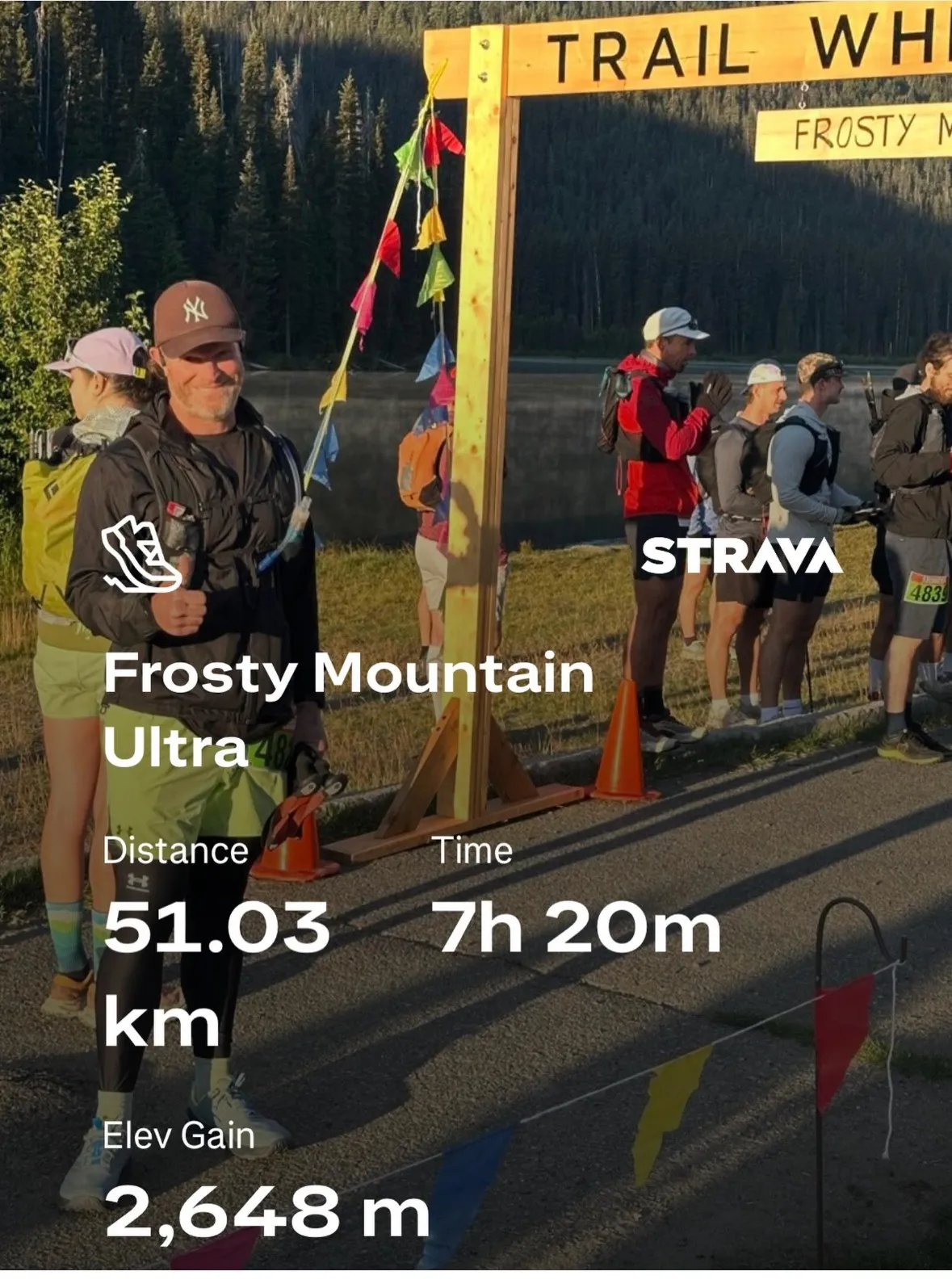
What he brings that the ultramarathon world has been missing is specific weight training and gym-related knowledge — strength work that protects joints, builds durability, and keeps you racing for years instead of burning out in one season.
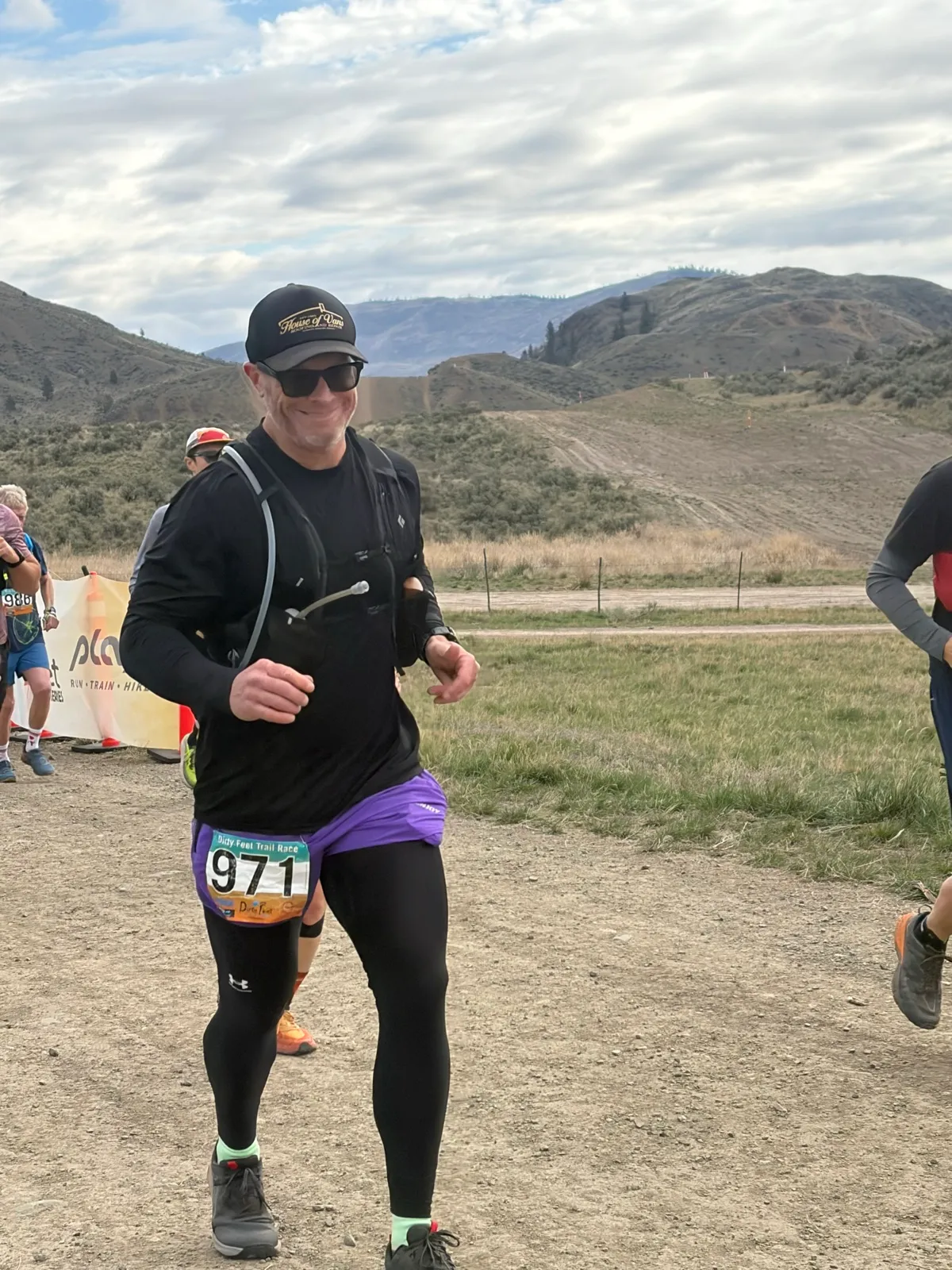
His approach draws on his VO2 max in the high fifties and resting heart rate in the high thirties — numbers he earned through years of progressive training, not genetics alone. He understands pacing, fueling, heat and altitude adaptation, and the mental side of staying on your feet when everything hurts.

Whether you’re training for your first ultra, chasing a personal best, or rebuilding after injury, the conditioning is specific to your goal and your body.

- A decadeof trail running
VO2 max: high 50s
VO2 max is the most oxygen your body can use during all-out effort, measured in millilitres per kilogram of body weight per minute. It is the standard measure of aerobic fitness.
Trevor's Garmin rates his reading Superior: the top 5% of men in his age group. For men 40 to 49 that line is 52.5. The middle of the same group sits around 40. A reading in the high 50s is also past the top-5% line for men in their twenties, which is 55.4.
- Trevor, high 50s
- Middle of the group, about 40
- Top 5%, 52.5
Source: Garmin, VO2 max standard ratings (data from The Cooper Institute)
Resting heart rate: high 30s
Resting heart rate is how many times your heart beats in a minute while you are fully at rest. A heart that moves more blood with each beat needs fewer beats to do the same work.
The normal range for adults is 60 to 100 beats per minute. Mayo Clinic puts a well-trained athlete closer to 40. Trevor's sits in the high thirties, below that.
In an endurance athlete a number this low is an adaptation to training. In someone untrained it can point to a problem, so it is always read alongside everything else.
- Trevor, high 30s
- Well-trained athlete, about 40
- Normal adult range, 60 to 100
Ultra marathons: 25+
An ultra marathon is any race longer than a marathon's 42.2 km. About 150,000 people finished one in the United States in 2025, in a country of about 340 million: fewer than 1 in 2,000.
The largest study of ultra results found that most ultra runners, 59%, race one a year. Trevor has finished more than twenty-five.
- < 1 in 2,000Americans who finished an ultra in 2025
- 59%of ultra runners race one a year
- 25+Trevor, and still running
Sources: RunSignup, 2025 ultramarathon statistics; RunRepeat, The State of Ultra Running
All of it at once
Each of these on its own puts Trevor in a small group.
| Trevor | General population | |
|---|---|---|
| VO2 max | High 50s | Top-5% line for men 40 to 49 is 52.5. The middle is about 40. |
| Resting heart rate | High 30s | Adults: 60 to 100. A well-trained athlete: about 40. |
| Ultra marathons | 25+ | Fewer than 1 in 2,000 Americans finished one in 2025. |
| Strength training | Three decades | 29.9% of American men aged 45 to 64 do any muscle-strengthening twice a week. |
| Body fat | 13 to 14% | 18 to 24% is typical for a man who is not an athlete. |
No study counts how many people have all of these at once. Multiplying the separate odds would overstate it, because fit people tend to have several. So the estimate below works the other way: it follows the rarest things with published figures and counts everything else as free.
Doing the maths
- Finished an ultra in 2025 About 150,000 of 340 million Americans.1 in 2,300
- Races more than one a year Twenty-five in a decade takes it. 41% of ultra runners do.1 in 5,500
- Has benched at the elite line for his weight At most 2.2% of men: 44.5% of men aged 18 to 44, the age group most likely to, lift twice a week, and 5% of Strength Level's lifters reach elite.1 in 250,000
- And everything else Elite squat, top-5% VO2 max, resting heart rate in the high 30s, 13 to 14% body fat, three decades under the barbell. Counted here as certain for anyone who got this far. They are not.1 in 250,000
About 1 in 250,000 About 0.0004% of people, well under 0.01%. About 1,400 people in the United States; at the same rate, about 170 in Canada.
That is a ceiling, not a count. Every step leans toward counting too many people. Step 3 assumes ultra runners are as likely to bench heavy as other men, when training for endurance is known to blunt strength gains. Step 4 counts five rare traits as free.
No study has measured this combination directly. This is arithmetic on published figures. Read it as an order of magnitude, not a precise number.
Estimate sources: RunSignup; RunRepeat; CDC, National Health Interview Survey 2020; Strength Level; Hickson (1980), strength and endurance interference; Statistics Canada, population estimates
Sources: Garmin / The Cooper Institute; Mayo Clinic; RunSignup; CDC, National Health Interview Survey 2020; American Council on Exercise